- the.fine.print.
- Posts
- Who gets to define 'respect'

A couple of days ago, our training focused on the topic of values. Values? Something you’ve heard a hundred times before? You’re right—values are often discussed: corporate values, value-based leadership, and so on. Maybe you’re thinking, “Oh, what a tired subject!”
But the topic of values is more like a wolf in sheep’s clothing—or maybe an unpolished diamond. Sure, value discussions often focus on selecting nice-sounding words that describe what’s important to us: openness, goal orientation, or—especially popular—respect. Simple enough, right? No further conversation necessary.
But what’s truly fascinating isn’t the words we choose but their deeper meaning—particularly in the context of relationships.
Since diversity and equality are recurring themes in my reflections, one part of the discussion stood out to me:
Every one of us wants to be treated with respect. In fact, perceived disrespect often provokes especially strong emotional reactions. When we feel disrespected, we claim the authority to define what respect means—and what it doesn’t.
But what about the other side?
The word respect comes from the Latin respicere, meaning "to look back, to regard." Respect is, in essence, a recognition: I see you.
Respect can only arise in the eyes of the beholder—or rather, in the heart of the one receiving it.
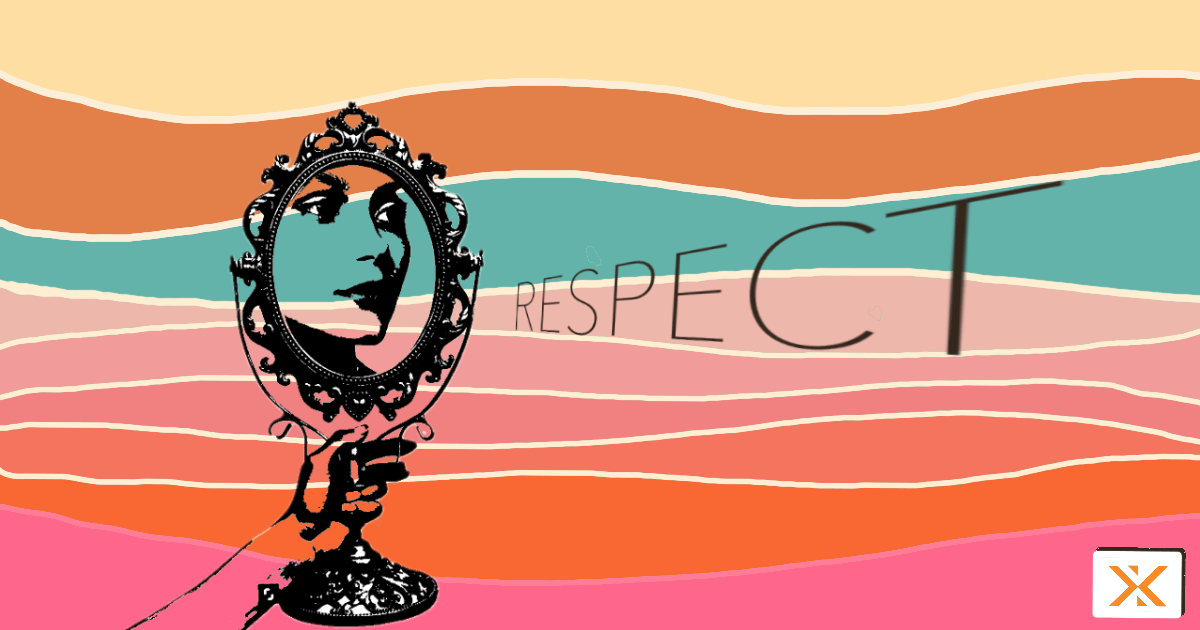
If someone feels disrespected by definition I have not lived up to my value! So the all-important question then is not what do I think respect is but “What do others need to feel respected? Is it my honesty, my consideration, my transparency, or my openness? Respect, in this sense, becomes a mirror—a reflection of the values that matter to others.
A beautiful thought, isn’t it?
Do you speak German? Curious to dive deeper into your values?
We created a tool to identify and clarify the ones that are dearest to your heart:
 Go to Page | “My values?! Of course I know what they are!” And in a way, that’s probably true. Though there is a difference between a vague idea and real clarity. |
Usually, I write my newsletter with a specific person or situation in mind. I write as a way to think about the world and to make sense of it. Is something currently puzzling you? Maybe the next issue could be about that… share your thoughts and questions with me: [email protected]
If you like what you read here, the biggest favour you can do me is to recommend the newsletter to someone who might benefit from it or to share some thoughts on social media. It’s very much appreciated!
Repekt ist ein Spiegel-Wert
Eine Werte-Reflexion
Vorgestern ging es im Training um das Thema Werte. Werte? Schon 100-mal gehört!? Stimmt, über Werte wird viel gesprochen: Unternehmenswerte, werte-basierte Führung und so weiter. Vielleicht denkst Du auch: “Ach, ein alter Hut!”
Das Werte-Thema ist aber eigentlich ein Wolf im Schafspelz oder vielleicht besser ein ungeschliffener Diamant. Klar, wenn es bei Wertediskussionen darum geht, dass wir ein gut klingendes Wort wählen, das beschreiben soll, was uns wichtig ist. Offenheit, Zielorientierung oder - besonders beliebt - Respekt. Alles klar, kein weiteres Gespräch notwendig.
Doch das wirklich Spannende sind nicht die Worte, die wir wählen, sondern die Betrachtung der Bedeutung - ganz besonders im Miteinander.
Und weil Diversity und Gleichberechtigung für mich immer wieder in den Fokus meines Denkens rücken, ist mir die Diskussion um Respekt ganz besonders im Herzen geblieben:
Jede/r von uns möchte respektvoll behandelt werden. Ja, es ist sogar so, dass empfundene Respektlosigkeit ganz besonders intensive emotionale Reaktionen hervorruft. Empfinden wir eine Respektlosigkeit uns selbst gegenüber erheben wir den Anspruch, dass wir die Deutungshoheit darüber haben, was respektvoll ist und was nicht.
Und andersherum?
Respekt kommt aus demLateinischen „zurückblicken“. Respekt ist also ein: Ich sehe dich.
Respekt kann nur im Auge des Betrachters entstehen - oder besser gesagt: Im Herzen derjenigen, die ihn empfängt.
Mein Wert ist Respekt. Wie kann es dann sein, dass sich jemand respektlos behandelt fühlt? Habe ich meinen Wert nicht erst dann wirklich gelebt, wenn die Menschen um mich herum sich auch respektiert fühlen?
Die entscheidende Frage lautet also: Was brauchen die anderen, um sich respektvoll behandelt zu fühlen? Ist es meine Ehrlichkeit, Rücksicht, Transparenz oder Offenheit? Respekt wird so zu einem Spiegel – einem Spiegel der Werte, die den anderen wichtig sind.
Ein schöner Gedanke, oder?
Kitzelt es dich, dich weiter mit Werten zu beschäftigen?
Wirf einen Blick auf unser Werte-Tool!
“Meine Werte?! Klar, kenn ich die!” |
Was beschäftigt Dich ?
Ich schreibe diesen Newsletter meist mit Gedanken an eine/n bestimmten Coaching Klienten/Klientin oder an eine Situation, die mich nachdenklich gemacht hat. Melde Dich bei mir mit Fragen und Gedanken, mit denen Du Dich gerade beschäftigst - vielleicht dreht sich dann die nächste Ausgabe darum? [email protected]
Dir gefällt, was Du liest? Teil’s!
Wenn Dir gefällt, was Du hier liest, dann ist der größte Gefallen, den Du mir tun kannst, den Newsletter weiterzuempfehlen oder Gedanken auf den sozialen Medien zu teilen! Hier der Link zum Weiterempfehlen: https://readthefineprint.beehiiv.com