- the.fine.print.
- Posts
- Leading at eye level
Leading at eye level
How to create a communication dynamic that's all about partnership

Kathrin Kroenig
September 20, 2024

“I really don’t know what to do with him anymore!” That’s how my coaching conversation with Mia started last week.
Mia is team leader of a support team. From all I know about her, I get the feeling, she is a really good manager. She is practical, direct and very professional. I have no doubt that she has things under control. But as you might know, leadership has this wonderful habit of always finding the one thing that will push you out of your comfort zone.
With her outburst she was referring to a relatively new member of her team who she feels she has no connection with. In her perception, whenever she asks him what he might need from her, he is expressing a need for guidance. Yet, every time she is offering feedback, she senses defensiveness.
She said: “I get these notifications about the tickets my team does and I randomly check them out. I told him what I’ve noticed but he just gets defensive!” When she tried to discuss his learning needs in the yearly employee dialogue he replied “Just tell me what I need to learn” in a clearly defensive tone.
As you know, in coaching we try not to get stuck with the story but to direct the attention towards what wants to happen. As it turns out, what Mia would want is a different kind of relationship: A partnership, a ‘we are in this together’ in our different roles, but still in it together.
Instead the relationship currently resembles that of a frustrated parent dealing with an uncooperative teenager.
And now it gets interesting!
Transactional Analysis: Understanding relationship dynamics
Eric Berne, the father of transactional analysis, introduced the concept of different ego states—Parent, Adult, and Child—that we slip into during conversations.

Illustration made by Kat
When adults communicate from the Adult ego state, conversations are collaborative. They’re open to discussing challenges and finding solutions. Ideally, Mia’s employee dialogue about development objectives would have gone something like this:
Mia: “What do you think will be most important for you to learn in the next few months?”
Employee: “I’ve been thinking about improving ABC skills. Based on your feedback, maybe I should start with training on this area. What do you think?”
Mia: “That sounds great. I also noticed that training on XYZ might help, but you don’t have to tackle everything at once. Let’s decide together on the priorities.”
The way Mia is describing their relationship at the moment resembles more a parent doing their best to get through to a child and her employee answering in that same dynamic:

Leadership at eye level means shifting the Dynamic:
From Parent-Child to Adult-Adult
What needs to happen in situations like these is a shift in the dynamic. Both individuals need to take responsibility for their roles and the conversation. Since Mia is the one currently feeling the challenge—and given her leadership role—she’s in a better position to initiate that shift.
In our session, we explored how Mia could step out of her role as a “parent” and approach the situation differently.
We eventually settled on her approaching her employee not like his manager but like she would a colleague. She would try to speak from the heart sharing that she really wants a good working relationship but that she really doesn’t know how to do it in a way that’s also good for him, sharing that she feels a bit stuck and asking if he would want to figure it out together.
In relationships, we are always equals no matter the role
The thing is, in relationship dynamics, we are equal in the sense as all parties get to show up how ever they want.
In managerial roles, it’s easy to fall into the trap of behaving like a parent. The one who needs to check ‘if the homework was done’. Leading at eye-level means to be very conscious of approaching employees as fully responsible adults.
If you can picture yourself and the other person as parent and child, mabye with the index finger lifted to admonish someone or the other person stubbornly with their arms crossed, you are right in the middle of a parent-child dynamic.
The key is to take a step back and say “Let’s figure this out together.”
Something to read
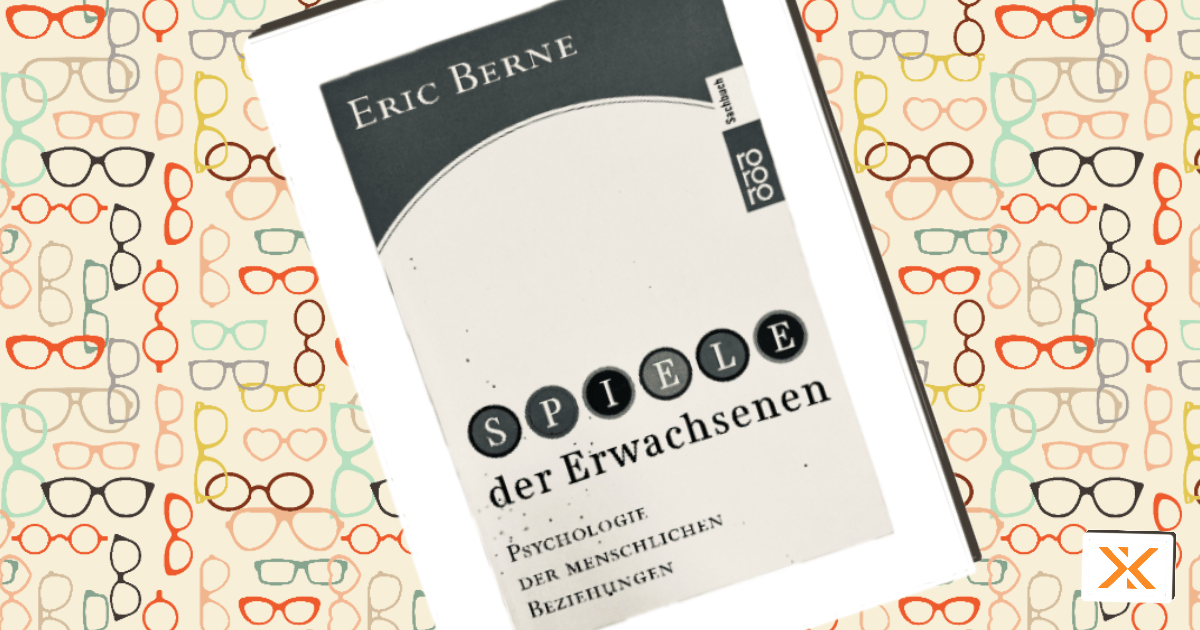
The ‘origin book’ of transactional analysis: was called “Games People Play” was written in the 1960s by Eric Berne. It’s an interesting and worthwhile read explaining all sorts of different dynamics.
It does, however, go quite deep. If you just want to get a basic understanding of Transactional Analysis, maybe start with the Wikipedia article. 😊